
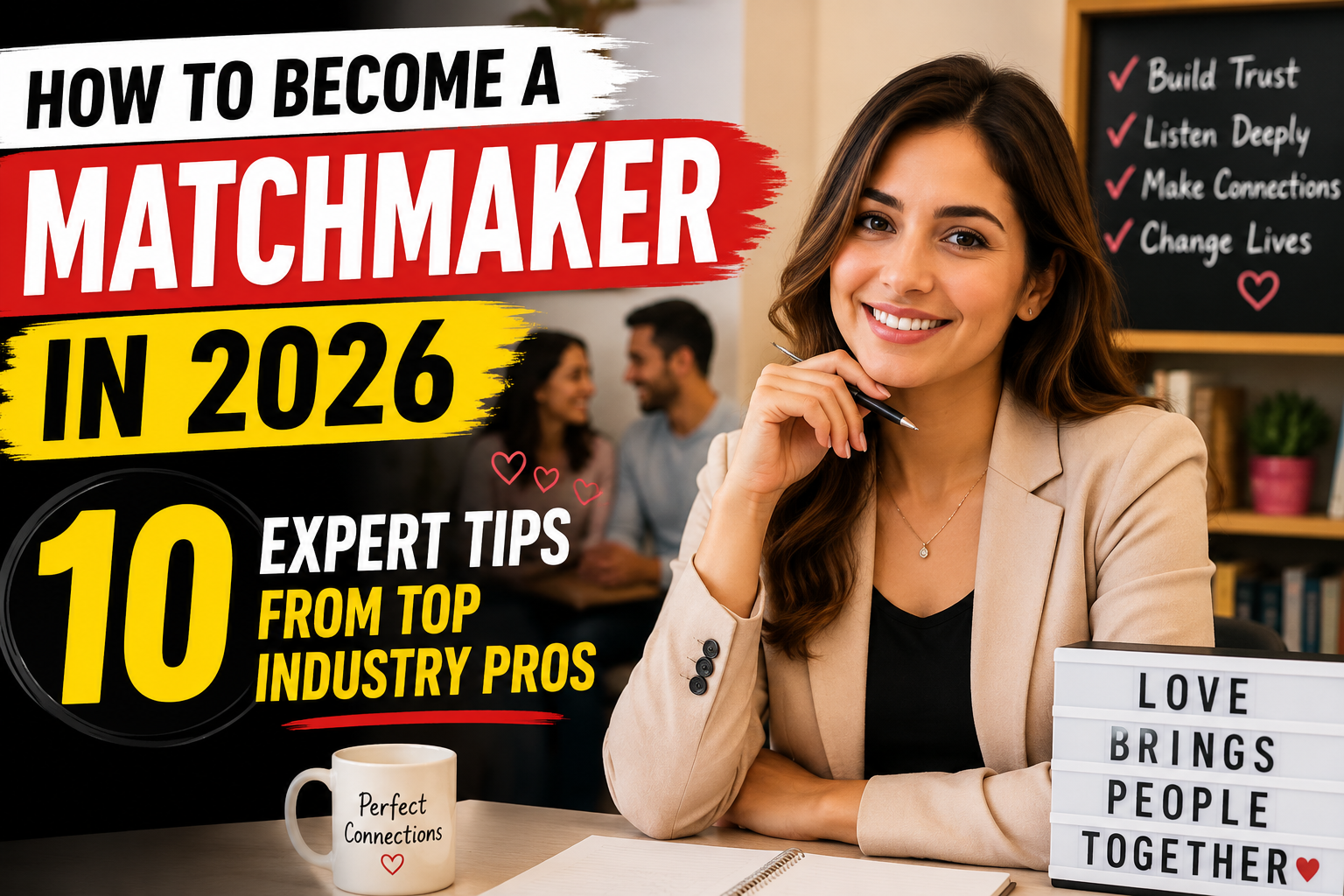
So you want to know how to become a matchmaker. You love love. You’re get excited when two people click. You want to help others find real connection.
That’s a beautiful starting point — but it’s not enough.
Loving love is the foundation. Loving people in all their imperfect, messy, complicated glory is what actually keeps a matchmaking career alive. The industry is competitive, yet it remains open to ambitious, open-minded newcomers who are willing to do the real work.
I gathered advice from established matchmakers who have built successful businesses. They shared the unexpected challenges, the skills that actually matter, and the mindset shifts required. Here are their 10 most valuable tips on how to become a matchmaker in 2026.
1. Learn From Established Matchmakers
There is no substitute for learning a craft from someone who has already done it.
Michal Naisteter of Michal Matches strongly recommends becoming a student of the industry early. Look for apprenticeships, assistant roles, internships, or even social media and recruiting support positions at existing agencies.
Networking matters as much as knowledge. Great matchmakers are both heart-centered and business-minded. Loving love will only take you so far — you also need to understand how to run a sustainable business.
2. Invest in Coaching Training
Modern matchmaking is no longer just about making introductions. Clients bring baggage, patterns, and blind spots. They need coaching through the process.
Strong coaching skills help clients recognize their patterns, improve communication, and grow. Many successful matchmakers recommend getting certified as a dating or relationship coach. Programs from places like Hart Coaching Academy, the Relationship Coaching Institute, or even Gottman Institute training can give you a serious edge.
As Michal puts it: Matchmaking is about much more than matches.
3. Become a Lifelong Student of the Industry
Don’t let reality TV or romantic comedies shape your understanding of the job.
Read books by experienced matchmakers (Maria Avgitidis and Rachel Greenwald are frequently recommended). Listen to podcasts. Attend conferences. Stay curious about relationship psychology, attachment theory, communication styles, and current dating trends.
The dating landscape changes fast. The matchmakers who keep learning keep winning.
4. Find Your Matchmaking Niche
“There are riches in niches.”
May Bugenhagen of Two Asian Matchmakers is blunt about this: to be successful, you have to be niche. Trying to serve everyone usually means you serve no one particularly well.
Hone in on the group you are most passionate about helping. When you become known for serving a specific community extremely well, the right clients can find you more easily.
5. Build a Real Community
Alina Fattakhova of Beau Monde Matchmaking emphasizes that your vibe is not for everyone — and that’s okay. Your job is to find your crowd.
Social media is useful for visibility, but in-person connection is powerful. Hosting events helps you build relationships, sharpen your ability to read people, and create genuine community. Events also give you live practice observing chemistry, communication styles, and character.
6. Develop High Emotional Intelligence
Matchmaking requires strong people skills and high emotional intelligence (EQ).
You need to understand character, relationship patterns, and communication styles. Watching how people interact at events or during conversations gives you far more information than any questionnaire. The ability to read between the lines is a core professional skill.
7. Fall in Love With People, Not Just Love Stories
Jessica Fass of Fass Pass to Love says successful matchmakers are endlessly curious about personalities, family dynamics, values, attachment patterns, and what actually makes two people compatible beyond a surface checklist.
If you are genuinely fascinated by human behavior, you will become a better matchmaker. Superficial interest in “love” fades. Deep curiosity about people lasts.
8. Become an Exceptional Interviewer and Listener
Your job is not simply asking “What’s your type?”
The best matchmakers ask thoughtful follow-up questions that uncover what someone actually needs in a life partner, not just what they think they want. Some of the most important information comes from what clients don’t say at first. Learning to listen between the lines is one of the greatest skills you can develop.
9. Never Stop Learning and Building Skills
The most successful matchmakers treat every client, every success, and every mismatch as a lesson.
Study relationship psychology, coaching techniques, modern dating trends, and communication. Build a diverse skill set because you will often help clients navigate vulnerability, rebuild confidence, heal from past relationships, and make one of the biggest decisions of their lives. It is meaningful work — and a real responsibility.
10. Turn Your Own Life Experience Into Insight
Jill Dunn of Jillin’ It has one of the most honest origin stories: she became a matchmaker after her own divorce. Navigating dating with two young kids made her endlessly curious about why relationships work and why they don’t.
You don’t need to have all the answers to start. You need curiosity. Become a student of people before you officially become a matchmaker. Your own disappointments, lessons, and growth can become powerful tools — as long as you process them with honesty and hope.
As Jill says, hope is part of the job. Every great love story begins the same way: one day you don’t know each other, and the next day you do.
Realistic Picture of the Career in 2026
Becoming a matchmaker is rewarding, but it is not easy or glamorous every day. You will deal with difficult clients, mismatched expectations, ghosting, and emotional labor. The ones who last combine heart with business sense, coaching skill with clear boundaries, and optimism with realism.
Many successful matchmakers today blend traditional introductions with dating coaching, events, and digital tools. The professionals who thrive are those who keep adapting.
How This Ties Into Better Dating for Everyone
Even if you never become a professional matchmaker, these principles improve your own dating life: curiosity over judgment, growth over perfection, listening over checklisting, and community over isolation.
If you’re currently dating, focus on the same foundations the experts recommend — self-awareness, clear communication, and willingness to grow.
We regularly publish practical resources that support exactly this kind of intentional dating:
- How to Write a Dating Profile That Gets Quality Matches
- Best Dating Apps for Serious Relationships 2026
- Red Flags and Green Flags in Online Dating
- Online Dating Safety Tips
- What Matchmakers Do When Their Best Clients Can’t Find Love
Final Thoughts
How to become a matchmaker ultimately comes down to this: love people more than you love the idea of love, stay curious, keep learning, find your niche, and treat the work as both a craft and a responsibility.
The industry still has room for newcomers who are willing to do the inner and outer work. If you are genuinely fascinated by human connection and prepared to build real skills, you have a legitimate path forward.
Are you considering a matchmaking career, or do you just want to date more intentionally?
Tell me in the comments — I read every response.
The best matchmakers don’t just create couples. They help people become better partners. That is work worth doing.


