
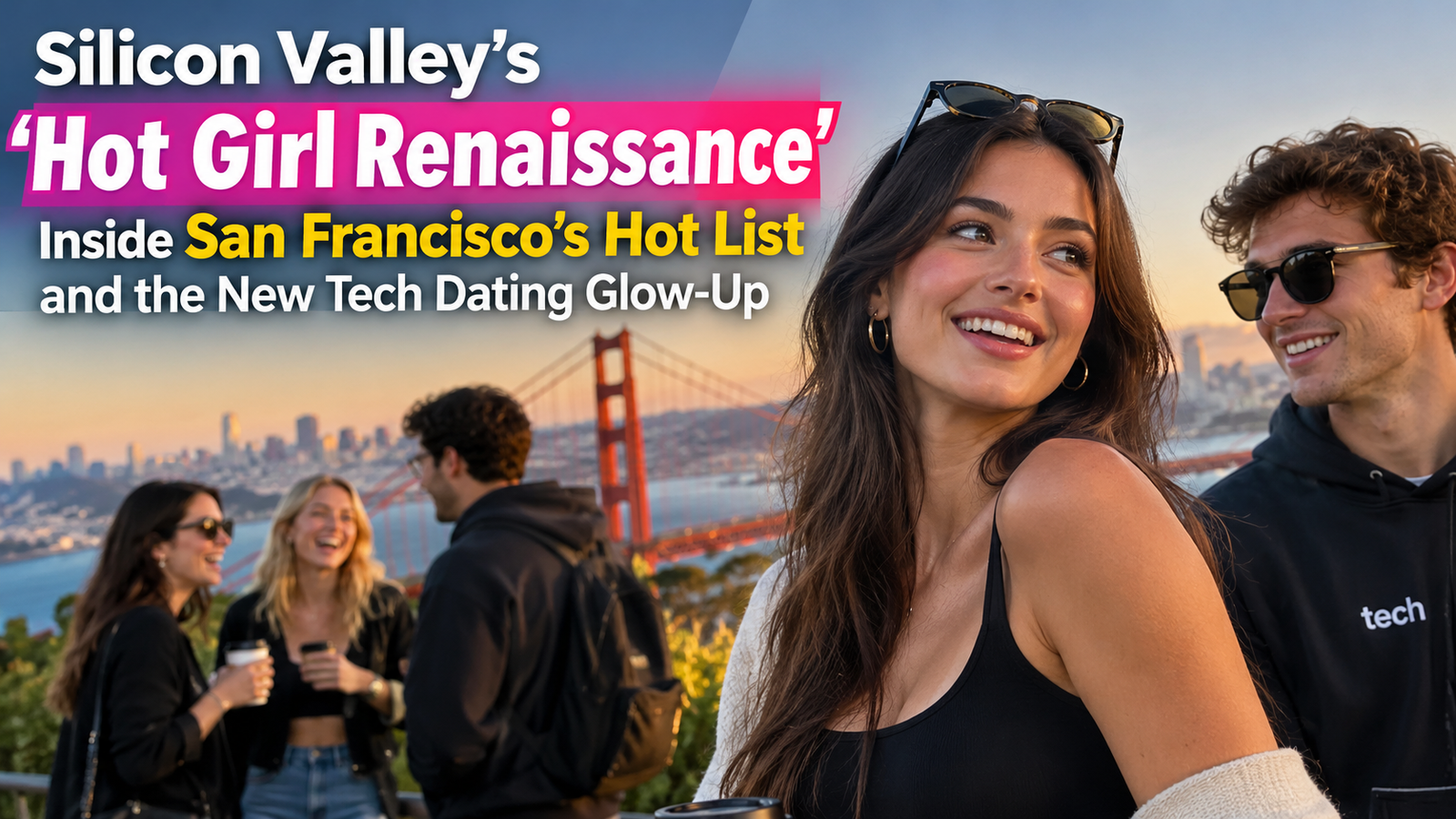
For years the stereotype was brutal and consistent: San Francisco and Silicon Valley = brilliant but fashion-challenged tech bros in Patagonia vests, terrible ratios, and dating apps that feel like a desert.
In 2026 that narrative is getting a glossy makeover. Welcome to the Silicon Valley Hot Girl Renaissance.
The clearest symbol arrived at the end of August when Celeste Amadon, founder of the AI-powered dating app Known, dropped “San Francisco’s Hot List” — a curated ranking of the city’s most dateable people. Judged on Attraction, Ambition, Accomplishment, Reputation and Aura, the list immediately went viral, pulled in over 15,000 nominations, and forced everyone to admit the quiet part out loud: SF might actually be getting hotter.
How the Hot List Happened
On 31 August 2026, Amadon posted a moody selfie on X and announced she had been quietly compiling SF’s most dateable humans. The first batch dropped days later — a mix of startup founders, AI researchers, and a couple of non-tech names (including a Gap buyer who suddenly received a flood of LinkedIn requests instead of dates).
Roughly half the initial list were founders. Thirteen worked in AI. The heavy tech skew was unsurprising given where the nominations came from, but Amadon insisted “hot” was never only about looks. “Hot is a way of being. It’s hot to be funny. hot to be smart. hot to be ambitious. It’s hot to be kind. And yes, it’s hot to be hot,” she said.
The list was pure marketing genius for Known (a swipeless, voice-survey AI matchmaking app launched earlier in 2026), but it also tapped into something real.
The Broader Hot Girl Discourse
Just days earlier, Mantis Biotech founder Georgia Witchel had posted a viral thread titled “Tech Is Having a Hot Girl Renaissance.” She pointed out the sudden wave of young, attractive women in tech posting polished, confident (sometimes “tastefully slutty”) content while building companies. Witchel framed it as a renaissance of sales culture — attractiveness as a legitimate professional and social asset again.
Then there were the parties. Last summer Madison Kanna (herself later Hot Listed) and Cat Orman threw an “enforced ratio” event at a Tesla showroom with a clear dress code: unapologetically feminine and fun. Patagonia vests would be turned away at the door. The message was unmistakable — the old tech uniform was out.
Together these moments signal a cultural correction. After years of “move fast and look homeless,” a new cohort is deciding that looking good, having aura, and actually being dateable are features, not bugs.
Why This Hits Different in San Francisco
San Francisco’s dating market has long been legendary for all the wrong reasons: extreme gender skew in tech, brutal app ratios, early bedtimes, and a reputation for low-effort male presentation. Women often describe feeling like they have infinite options yet still struggle to find someone who combines ambition with basic social polish. Men complain the bar is impossibly high.
The Hot Girl Renaissance (and its male equivalent on the Hot List) is an attempt to raise the collective bar. It says: ambition and intellect are hot. Taking care of yourself is hot. Having main-character energy is hot. Showing up to a party looking like you tried is hot.
It also quietly pushes back against the idea that caring about attractiveness is shallow. In a city that runs on status, “hot” has always been a form of capital. People are just being more honest about it now.
The Double-Edged Sword of Being “Hot” in Tech
There is obvious tension here. Celebrating hotness can feel like a step forward for women who were previously told to dim themselves to be taken seriously in male-dominated rooms. At the same time it risks reducing complex humans to aesthetic + LinkedIn flex.
Some on the list reportedly found out they had been included only when strangers started networking them. Others leaned all the way in. The discourse has been messy, funny, and very online — exactly what you expect from SF.
Still, the underlying shift feels healthy: people are tired of the sloppy, low-vibes version of tech culture. They want peers who are building the future and know how to hold a conversation, dress for the occasion, and generate actual chemistry.
What This Means for Regular Daters (Even If You’re Not on Any List)
You don’t need to be a founder or make a Hot List to steal the useful parts of this renaissance:
- Presentation is a signal — Effort in how you look and carry yourself communicates self-respect and consideration for the other person.
- Aura is real — Confidence, kindness, humour and ambition compound. Looks open the door; personality keeps people in the room.
- Curated > endless — Known’s entire model (and the Hot List itself) rejects infinite swiping in favour of fewer, higher-signal options.
- Scene matters — If your current environment rewards looking like you slept in your vest, find (or create) rooms that reward more.
- Honesty about what you find attractive is allow — Pretending looks and vibe don’t matter helps no one.
The Known App Angle
It’s impossible to ignore that the Hot List is also extremely effective growth hacking for Known. The app uses long voice surveys and AI to create more thoughtful matches in a city that desperately needs them. Whether the list converts into long-term users remains to seen, but as a conversation starter it has already success wildly.
Final Thoughts
The Silicon Valley Hot Girl Renaissance is part marketing stunt, part genuine cultural mood shift, and part overdue correction to the Valley’s dating reputation. San Francisco’s Hot List didn’t invent attractive, ambitious people in tech — it simply pointed the camera at them and refused to apologise for it.
In a city that has spent years optimising for intelligence and output while treating social and aesthetic intelligence as optional, this feels like progress. Hot is not the opposite of smart. In 2026, the most interesting people are increasingly refusing to choose.
Whether you’re building a startup, building a dating profile, or just trying to have better Saturday nights, the message is the same: raise your standards for yourself first. The rest tends to follow.
Would you want to be on a city Hot List, or does the whole thing make you roll your eyes?
Tell us honestly in the comments — SF daters, we especially want your verdict.
More high-signal dating guides:
- Best Dating Apps for Ambitious & Intentional Singles 2026
- How to Level Up Your Dating Presence (Style, Photos, Aura)
- Dating in Tech Cities: SF, NYC, London Survival Guides
- Green Flags of High-Value Partners
- How to Date with Ambition Without Being Exhausting
- Online Dating Safety Tips
The future is being built people who can code and make eye contact. That’s a renaissance worth joining.


